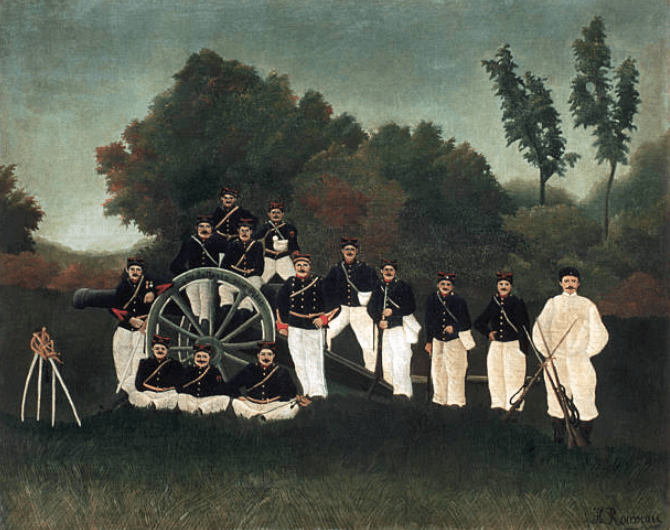
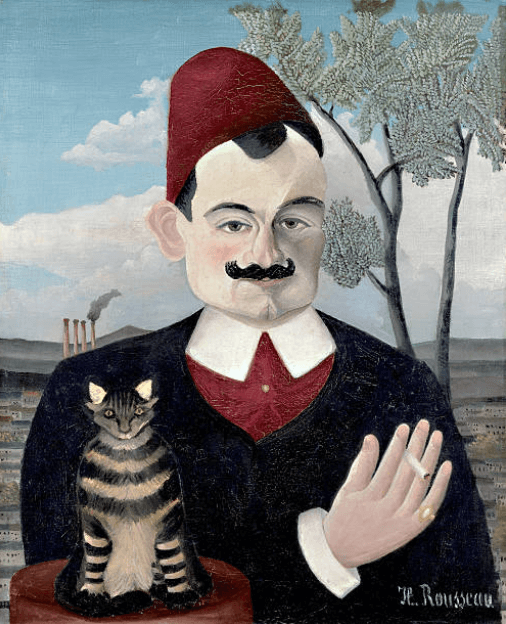
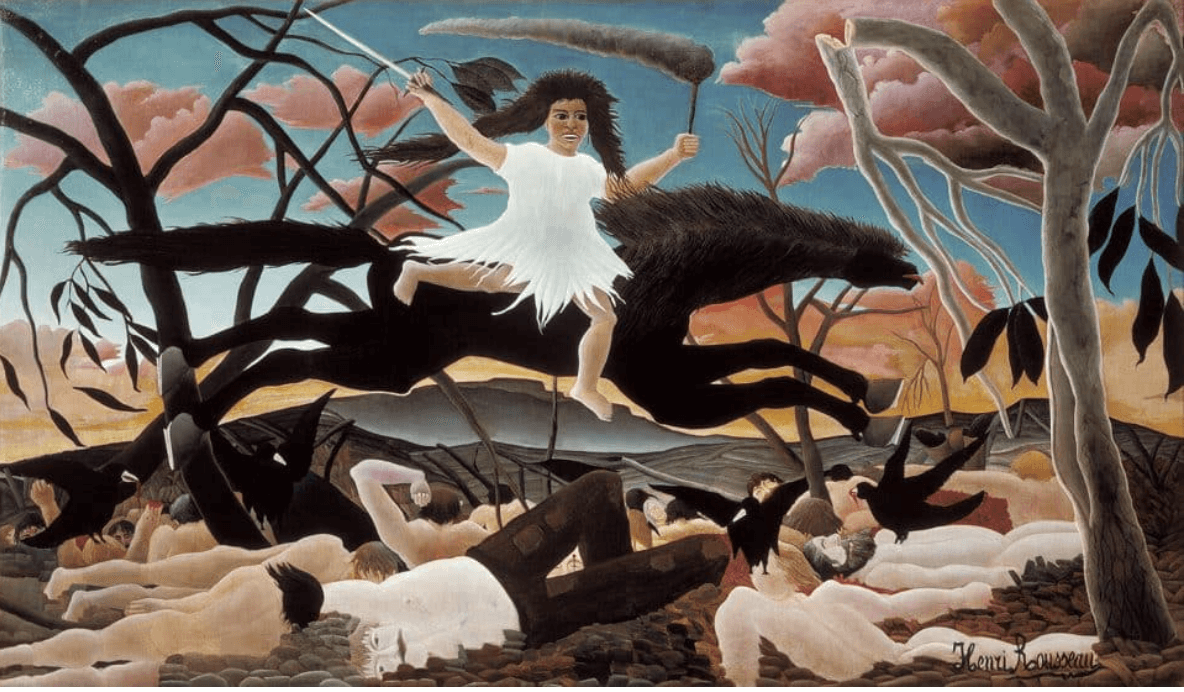
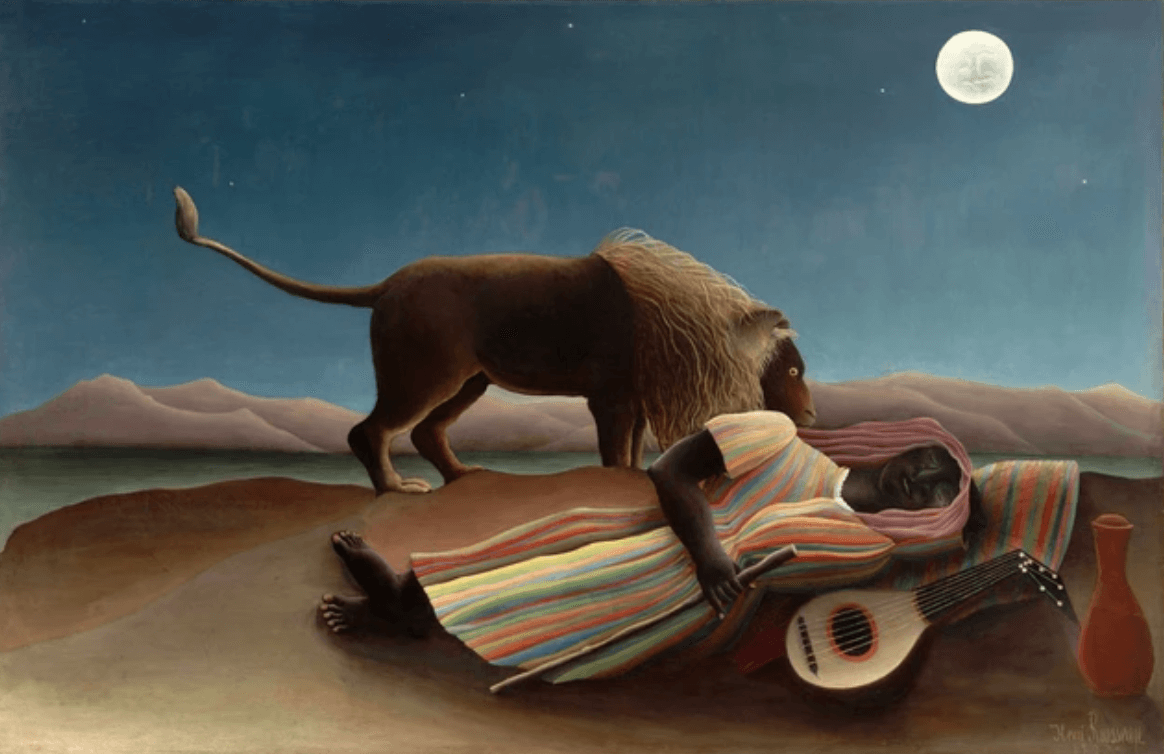
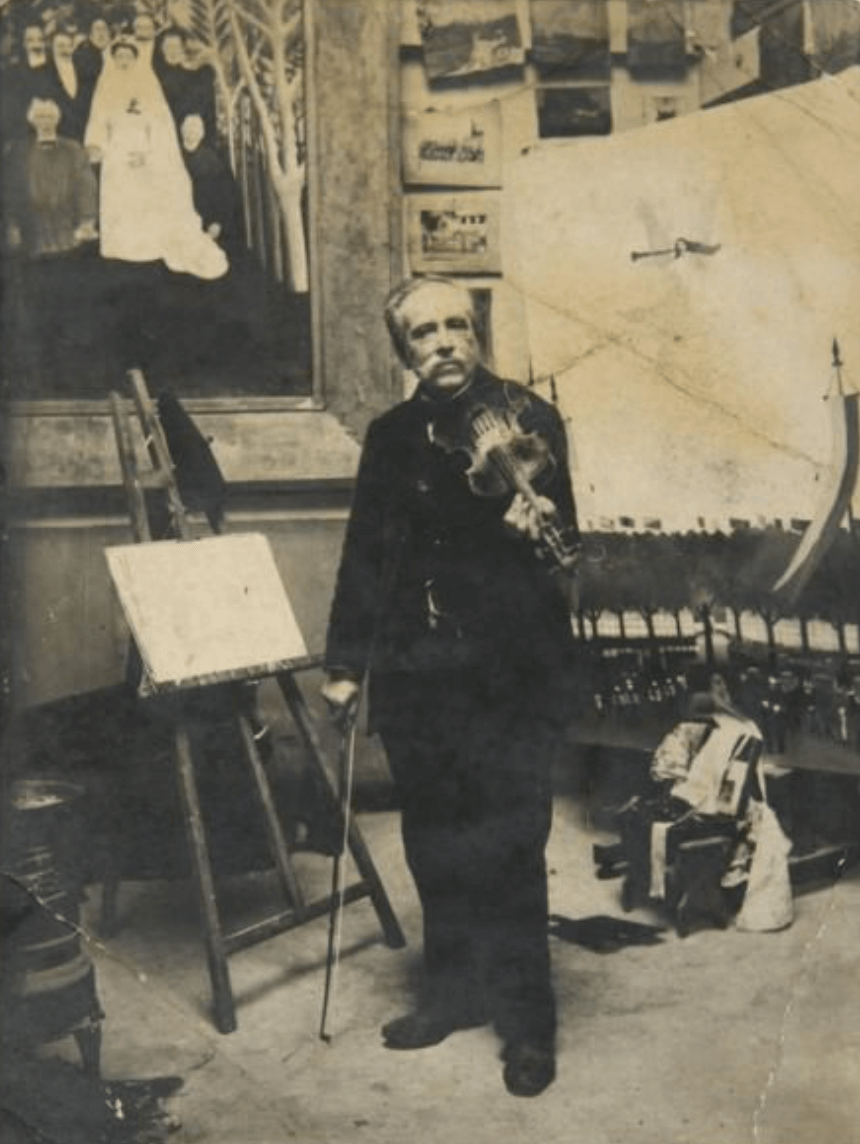
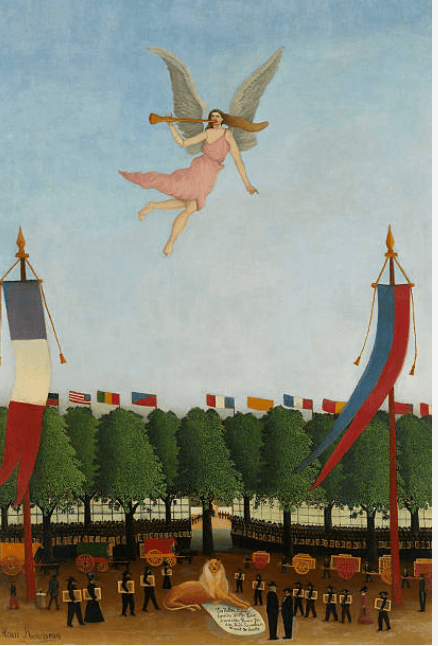
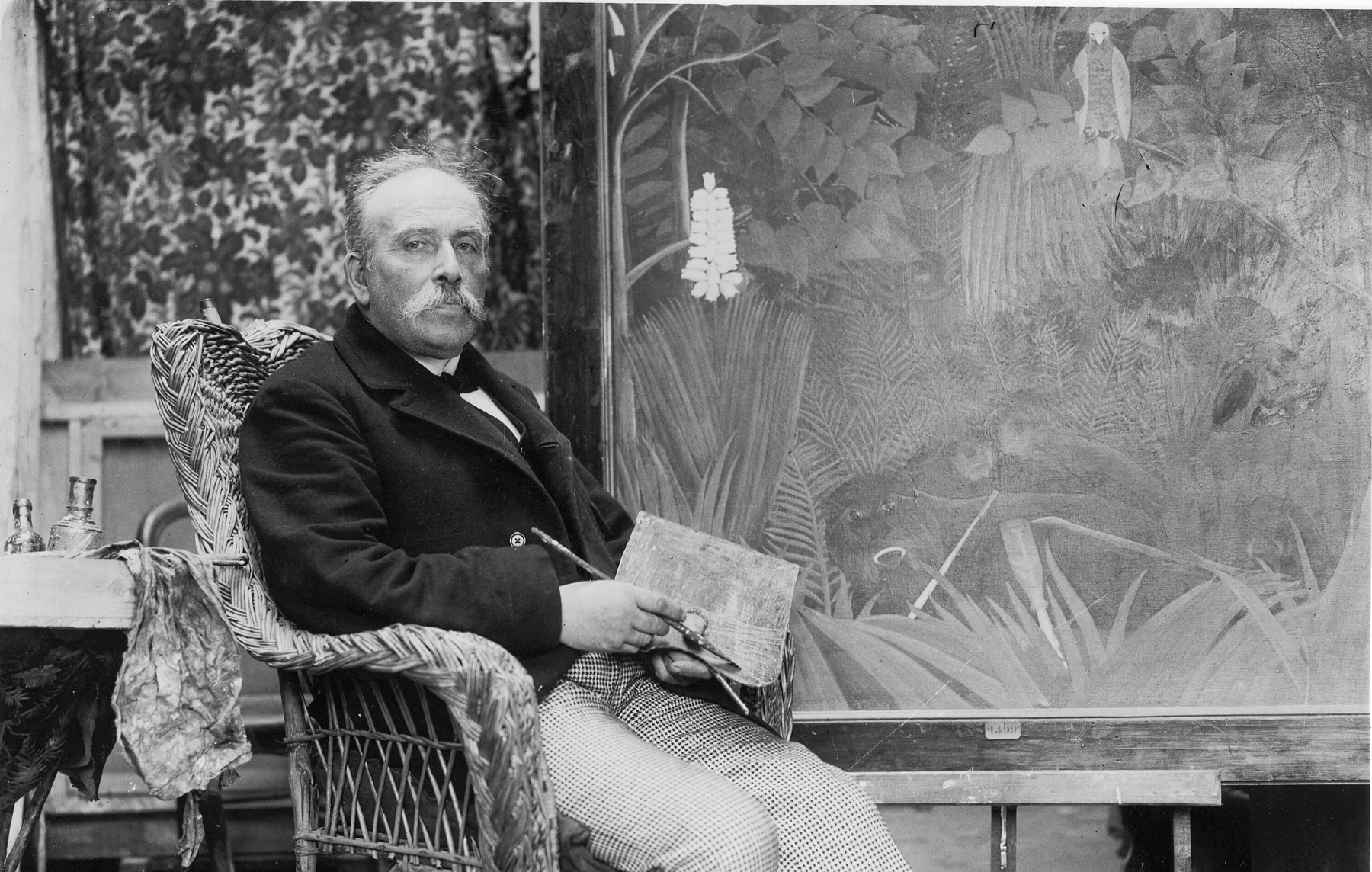
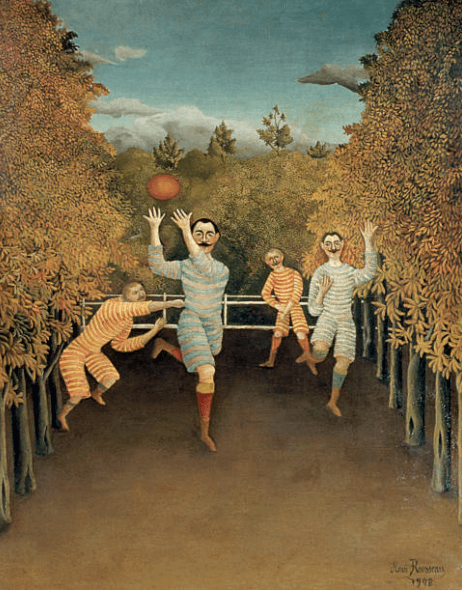
Henri Rousseau, like Séraphine Louis, André Bauchant, Louis Vivin, René Rimbert, and Camille Bombois, is now recognized worldwide and exhibited in the world's most important museums. These artists, labeled according to fashion as “20th-century primitives,” “naïve painters,” and “seven-Sunday painters,” and “modern primitives,” are nevertheless unclassifiable. They each painted in solitude and believed in their own creations. Their discovery by savvy art dealers such as Wilhelm Uhde, Jeanne Bucher, and Dina Vierny certainly contributed to bringing them out of obscurity. They were gradually discovered by the general public through exhibitions and then sought after by collectors.
One thing they had in common, however, was their modest origins.
Henri Rousseau was employed as a customs officer in Paris, Séraphine was a humble servant in the homes of the bourgeoisie in Senlis, André Bauchant was a nurseryman, Camille Bombois was a wrestler at fairs, René Rimbert was a postal worker, and Louis Vivin was responsible for sorting mail on government trains.
Henri Rousseau was born on May 21, 1844, in Laval, Mayenne. He was the son of Julien Rousseau, a tinsmith, and Eléonore Guiard. At a very young age, he was sent to boarding school because his father's business was not doing well and eventually went bankrupt. Not particularly gifted academically, Henri Rousseau did not complete his secondary education. However, his artistic talents quickly became apparent through drawing and music. In 1860, at the age of sixteen, he won prizes in both disciplines.
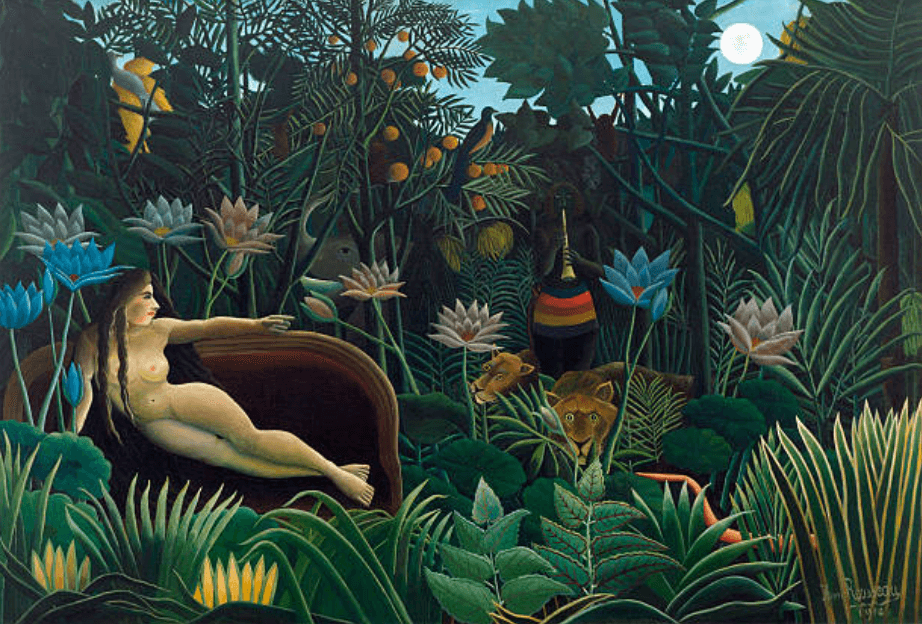
He left school and found a job as a clerk for a lawyer in Angers. Unfortunately, he committed a breach of trust by stealing a small amount of money. He was sentenced to prison and, in order to escape punishment, chose to enlist in the army and joined the 51st Infantry Regiment in Angers, signing up for seven years. He met comrades who had taken part in the French expedition to Mexico in 1861. This gave rise to the legend that he himself had participated in this expedition and that he was subsequently inspired by the Mexican landscapes to paint lush forests and jungles populated by wild animals.
In reality, Rousseau never left France. But he allowed the legend of the great adventurer to spread, as it was more romantic and also flattering for him.
Having completed his contract, and following the death of his father, he left the army in 1868 and moved to the capital. A year later, he married Jeanne Désirée Clémence Boitard, a seamstress, who bore him seven children, only one of whom survived to adulthood. He found a job with a bailiff, then in 1871 obtained a position as a second-class customs officer at the Paris octroi, the tax administration that controlled the entry of goods into the capital and collected a tax also known as octroi. Rousseau was responsible for controlling alcoholic beverages.
It was the poet Alfred Jarry, also from Laval, a friend and admirer of Rousseau, who humorously gave him the nickname Douanier Rousseau, which has remained famous ever since and has been adopted by the art world.
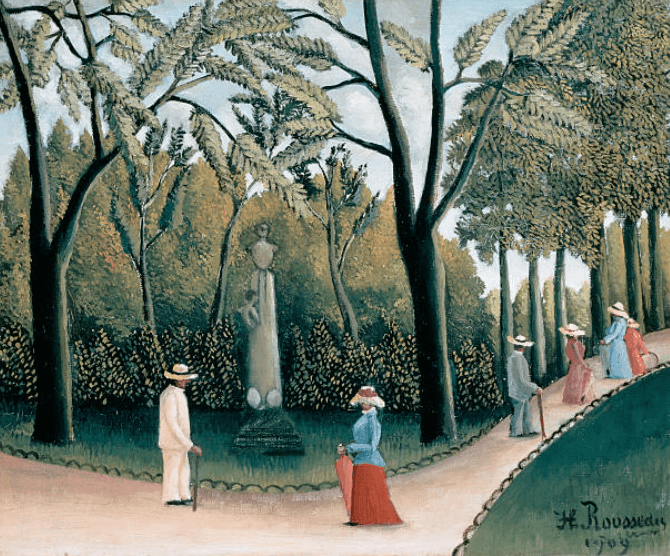
While working as a tax collector at the Octroi de Paris to put food on the table, Henri Rousseau began painting in the early 1870s. Like Augustin Lesage, he was a believer in spiritualism and was convinced that spirits guided his brush. He was a regular visitor to the botanical garden and menagerie at the Jardin des Plantes in Paris. In 1884, he obtained a “copyist” card at the Louvre Museum. At the same time, a new salon was created in Paris, organized by the painter Paul Signac: the Salon des Indépendants. Rousseau exhibited for the first time in 1886 at this salon, which did not require a jury for admission; he would be present there every year until his death. Over the years, the Salon des Indépendants enabled Henri Rousseau to gain a certain notoriety in the artistic world.
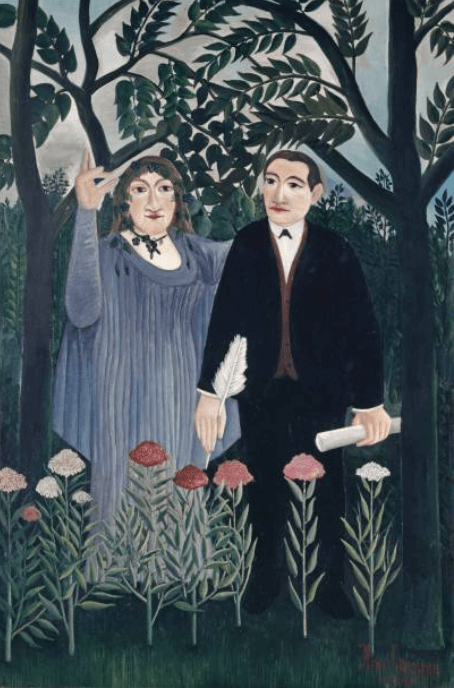
However, Rousseau had no formal training in painting. His work amused and provoked mockery and was not taken seriously. He met Guillaume Apollinaire and Marie Laurencin, who became his friends and remained loyal to him. He also became friends with Edgar Degas, Paul Gauguin, Toulouse Lautrec, and, of course, Pablo Picasso. Picasso bought some of his works and encouraged him. Henri Rousseau's candor, kindness, and imagination amused the Catalan artist, who often organized parties for him with his friends. Picasso also admired Rousseau's immense talent, and his trained eye told him that he was not mistaken.
However, it is clear that his career as a self-taught painter began late, but his reputation grew in artistic circles and in 1901 he even became a teacher of drawing and painting in an official association. This was a huge recognition and social success for him.
Shortly afterwards, he met the German art critic and dealer Wilhelm Uhde, who in turn introduced him to Ambroise Vollard, an avant-garde dealer with an international reputation.
In 1908, Picasso organized a large banquet at the Bateau-Lavoir, a building where many artists who are now renowned lived. Among those present were Guillaume Apollinaire and his friend Marie-Laurencin, André Salmon, Moïse Kisling, Foujita, and the poet and painter Max Jacob. In a letter to René Rimbert, Jacob described in great detail the famous evening where wine flowed freely, which was not to the displeasure of Henri Rousseau. During the evening, Rousseau leaned over to Picasso and whispered in his ear: “In short, you and I are the greatest painters, me in the modern genre, you in the Egyptian genre...”
A year later, in 1909, he sold a collection of paintings to the art dealer Antoine Vollard for the considerable sum of 1,000 francs. This enabled him to fulfill his dream by purchasing his first studio in the 14th arrondissement of Paris, at 2bis Rue Perrel. During this period, Henri Rousseau drank heavily and often did not return home until dawn, in a state of advanced intoxication. He frequently fell and regularly rolled around in the gutter; during one of these nighttime escapades, he seriously injured his leg and soon after contracted gangrene as a result of the poorly treated wound.
At the end of August 1910, he was admitted to Necker Hospital for a consultation; the hospital records describe him as an alcoholic! He died on September 2. Paul Signac and Robert Delaunay followed his coffin to the cemetery in Bagneux. All his other friends were away from Paris. He was buried in a common grave. A little over a year later, a few friends clubbed together to give him a more dignified burial. At the end of the ceremony, his friend Guillaume Apollinaire wrote an epitaph in chalk, which was later engraved on his tombstone by sculptors Constantin Brancusi and Julio Ortiz de Zarate.
On October 12, 1947, the Association of Friends of Henri Rousseau had his remains transferred to Laval, his birthplace, where they have rested ever since in the Jardin de la Perrine.
Apollinaire's words are engraved on his grave:
We salute you
Gentle Rousseau you can hear us
Delaunay, his wife, Monsieur Queval and myself
Let our luggage pass duty free through the gates of heaven
We will bring you brushes paints and canvas
That you may spend your sacred leisure in the light and Truth of Painting
As you once did my portrait facing the stars
Lion and the gypsy