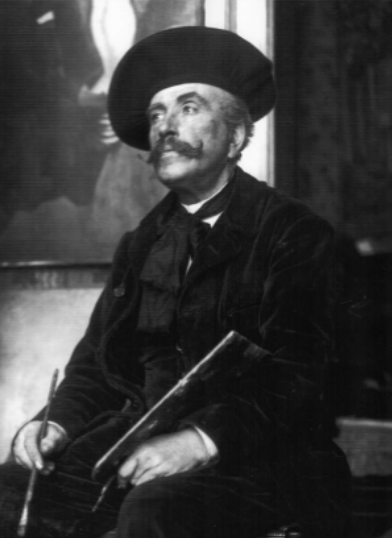
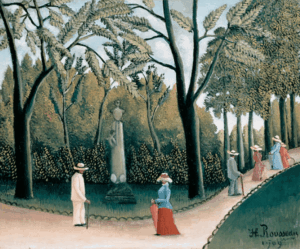
It is estimated that Henri Rousseau painted around 250 paintings during his lifetime. Most of these paintings have been catalogued, around a hundred remain uncertain or disputed, and others are still unknown. Several specialists have catalogued these paintings without agreeing with each other. However, there are catalogs known as “annoted catalogs,” two of which are considered authoritative. However, the authors contradict each other, mutually rejecting fakes or questionable claims, attesting to the authenticity of some works while outright rejecting others that are not included in their own catalog. These works have the merit of existing, but they are old. As a result, most opinions were based on personal, purely academic feelings, with art historians of the time contenting themselves with academic analyses and entirely personal and empirical impressions.
Scientific analysis was very rudimentary at the time, if it existed at all.
Today, various scientific analysis techniques (physical and chemical) have provided important and essential additional information. The analysis of art historians can be called into question. However, the techniques and methods used by forgers have also evolved, and scientific analysis cannot be considered infallible and indisputable. The use of old pigments, antique canvases, and artificial intelligence in the production of works of art is becoming increasingly effective and relevant in the market.
This work in progress does not seek to question everything and enter into new controversies. For each work, we have identified the sources and provenance of the paintings, but also, for some that are still unknown, we have provided analytical elements based both on academic expertise and, where necessary, on complementary scientific analyses.
Art historians and scientists must share a common, non-contradictory approach to analysis. They must work together on the same piece and contribute their knowledge in order to get as close as possible to the truth. Some of the authentications of works hanging in the greatest museums could also be called into question.
In the past, have we not seen certain works that were later proven to be dubious or even fake, admired by certain officials during vernissages both in France and abroad?
Our analysis therefore aims to be as accurate as possible. If doubt persists about a painting, it will not be included in our directory. This is a personal choice that is solely the responsibility of the author, as the well-known phrase says: within the limits of his current knowledge.
This annotated catalog, currently in progress, is intended to be a new reference tool for art market, art lover, and expert.